IOMAC 2027 will host three pre-conference courses:
Courses 1 and 2 run in parallel and are limited to 15 participants each; the course registration fee covers attendance of one of them. The Dewesoft-sponsored course is free of charge and limited to 30 participants.
Course 1: Operational Modal Analysis: Background, Theory & Practice
DESCRIPTION
The course describes how Operational Modal Analysis (OMA) can advantageously be used instead of Experimental Modal Analysis (EMA) for accurate modal identification under actual operating conditions, and in situations where it is difficult or impossible to artificially excite the structure.
The course covers the theory and practice behind popular techniques developed for OMA, such as the Frequency Domain Decomposition (FDD) and the Stochastic Subspace Identification (SSI). Practical measurement techniques will be reviewed, both in case of well-separated modes, closely-spaced modes and with or without the presence of harmonic components. The OMA techniques will be illustrated by several application examples from civil engineering structures such as buildings and bridges, and mechanical engineering structures such as automotive, aerospace and space structures including both field and laboratory tests. An introduction to vibration-based Structural Health Monitoring (SHM) built on the Operational Modal Analysis framework will also be covered.
During the course there will be time for hands-on exercises using commercially available software.
WHO SHOULD ATTEND
Engineers and researchers who have basic knowledge of experimental modal analysis and who would like to expand their knowledge into the field of Operational Modal Analysis to perform modal analysis on structures under actual operating conditions, and in situations where it is difficult or impossible to artificially excite the structure. For example large civil engineering structures excited by wind and waves, or mechanical structures exhibiting self-generated vibration during operation.
Attendees are encouraged to bring their own laptops. None will be provided. Limited term licenses of OMA software will be provided.
COURSE OUTLINE
- Introduction to Operational Modal Analysis
- Basic idea and applications of OMA
- Advantages, assumptions and limitations
- Time data acquisition (measurement)
- Overview of identification techniques
- Comparison of OMA to EMA and ODS analysis
- Measurement and Measurement Validation
- Singular Value Decomposition (SVD) plots
- Short-Time Fourier Transform (STFT) contour plots
- Operational Modal Analysis Identification Techniques
- Projection channels
- Frequency Domain Decomposition techniques (FDD, EFDD, CFDD)
- State space models
- Stochastic Subspace Identification techniques (SSI-UPC, SSI-PC, SSI-CVA)
- Uncertainty estimation of modal parameters using SSI-UPCX
- Harmonic detection and reduction in the time and frequency domains
- Analysis validation
- Introduction to Structural Health Monitoring (SHM)
- Definitions, benefits, applications, and examples
- Theory: Vibration-based damage detection and damage detection residuals
INSTRUCTORS
Carlos E. Ventura, University of British Columbia

Prof. Ventura is a Civil Engineer with specializations in structural dynamics and earthquake engineering. He has been a faculty member of the Department of Civil Engineering at the University of British Columbia (UBC) in Canada since 1992. He is a registered professional engineer in British Columbia, California and Guatemala. He is currently the Director of the Earthquake Engineering Research Facility (EERF) at UBC, and is the author of more than 650 papers and reports on earthquake engineering, structural dynamics and modal testing. He is a member of several national and international professional societies and advisory committees. Prof. Ventura has conducted research for more than thirty-five years in the dynamic behaviour and analysis of structural systems subjected to extreme dynamic loads, including severe ground shaking. His research work includes experimental studies in the field and in the laboratory of structural systems and components.
Palle Andersen, Structural Vibration Solutions
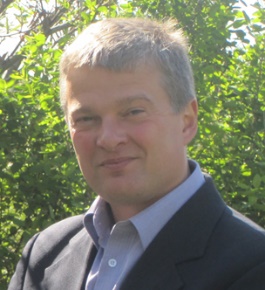
Dr. Palle Andersen is a Civil Engineer with specializations in computational methods for structural dynamics. He got his M.Sc. in 1993 from Department of Civil Engineering at Aalborg University, and his Ph.D. in 1997. Since 1999 he has been the managing director and co-founder of Structural Vibration Solutions A/S. He is the senior developer of the ARTeMIS software for Operational Modal Analysis. For more than 25 years, he has been giving lectures and courses on Operational Modal Analysis and the use of ARTeMIS software worldwide. He is the author and co-author of more than 100 papers and articles on Operational Modal Analysis and Damage Detection, and the co-inventor of the Frequency Domain Decomposition patent. Today one of the most used techniques for Operational Modal Analysis.
Course 2: Advanced Methods for Vibration Analysis
DESCRIPTION
Dynamical models play a key role in many branches of science. In engineering they have a paramount role in health monitoring, control and optimization. Accurate and precise identification of the models is often crucial to their subsequent use in applications. Data-driven modeling (system identification) and uncertainty assessment are established fields for determining mathematical models of dynamical systems on the basis of measurement data from dedicated experiments.
In this preconference course we will cover the fundamentals of data-driven modeling approaches (ranging from subspace algorithms, Bayesian filters to neural networks) as well as more advanced topics pertaining to uncertainty quantification, change detection and probability of detection concepts in NDT and SHM.
Targeted applications are large engineering structures, such as, bridges, ships, wind turbines, and small-scale laboratory experiments. The sessions comprise theoretical input lectures and hands-on Matlab/Python tutorials, based on simple mechanical systems.
WHO SHOULD ATTEND
PhD students, engineers, and researchers with basic knowledge of operational modal analysis who would like to expand their theoretical knowledge into the algorithms behind it. The course gives an overview of advanced methods for vibration analysis in the field, and helps understanding their mathematical background.
COURSE OUTLINE
- Welcome and introduction
- Subspace-based system identification
- Uncertainty propagation
- Parametric fault detection in linear and nonlinear dynamical systems
- Probability of fault detection with examples and links to NDT
- Bayesian filters for input-parameter-state estimation
INSTRUCTORS
Szymon Greś, Aalborg University
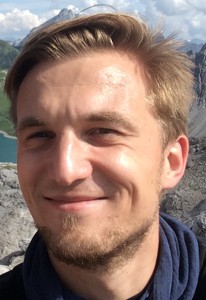
Dr. Szymon Greś is a tenure-track Assistant Professor at the Department of Electronic Systems, Aalborg University (AAU), Denmark. He obtained the Ph.D. degree from the Civil Engineering department at AAU, in December 2019. Through postdocs at INRIA (2019-2020), France, ETHZ (2021-2024), Switzerland and AAU (2024-2026), Denmark, his research broadened towards control and machine learning topics. His work is situated in data-driven learning of dynamical systems, bringing together the statistical aspects of modern data science and control with engineering specifics related to first-principle mechanical modelling and different sensing technologies. He investigates how to learn dynamic systems from data and make them resilient against faults and degradation phenomena, tackling uncertainty while doing so.
Alexander Mendler, Müller-BBM Industry Solutions and Technical University of Munich, Germany
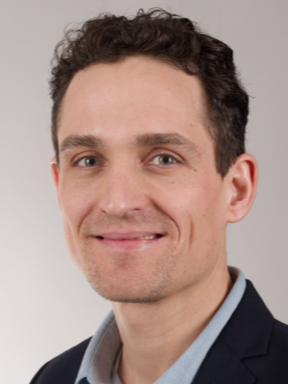
Dr. Alexander Mendler (born 1989) is an entrepreneur, consulting engineer, and researcher in the field of structural dynamics. He specializes in the analysis of ambient vibrations, operational modal analysis, and software development for structural health monitoring (SHM). He received an M.Sc. in Civil Engineering from the Technical University of Munich (TUM), Germany, a Ph.D. in Civil Engineering from the University of British Columbia (UBC), Canada, and a Habilitation from TUM. He served as Team Leader at the Chair of Non-Destructive Testing at TUM, as a Research Associate at the French National Institute for Research in Digital Science and Technology (Inria) in Rennes, as a Test Engineer at the Earthquake Engineering Research Facility at UBC, and as a Researcher with the German Federal Armed Forces in Hamburg.
Dr. Mendler has conducted numerous vibration tests in the fields of civil, mechanical, and aerospace engineering, including investigations of long-span bridges, high-rise buildings, hydropower dams, ancient monuments in Egypt, maglev trains, space launch vehicles, and satellites. Since 2021, Dr. Mendler has been a Lecturer at TUM, where he teaches the elective course Introduction to Structural Health Monitoring. In addition, he has been a member of the Scientific Committee of IOMAC since 2021 and has served as Chair of the Structural Health Monitoring Committee of the German Society for Non-Destructive Testing (DGZfP) since 2025.
Michael Döhler, Inria, France
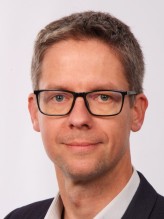
Dr. Michael Döhler is a research scientist at Inria (French National Institute for Research in Digital Science and Technology) in Rennes, where he leads the I4S research team. He obtained his Ph.D. degree in applied mathematics from the University of Rennes 1 in 2011. Before joining Inria in 2013, he held postdoctoral positions at Northeastern University, Boston, USA, and the BAM Federal Institute for Materials Research and Testing, Berlin, Germany. His research focuses on statistical and numerical methods for system identification and fault diagnosis in structural vibration analysis, with particular emphasis on uncertainty quantification, operational modal analysis, and vibration-based structural health monitoring. He received the IOMAC Leadership Award in 2024 for his contributions to operational modal analysis.

A third pre-conference course will be organised by Dewesoft, a conference sponsor. The topic, outline and instructors will be announced here as soon as they are confirmed.